November 5, 2025 8:21 pm
By Web Editor
With Indonesia’s hot and humid tropical climate, cooling remains one of the country’s largest energy demands. In commercial buildings, air conditioning consumes up to 50–60% of total electricity use, making it a critical target for efficiency and sustainability improvements. Among HVAC systems, chillers are the biggest energy consumers—accounting for 25–40% of a building’s total energy demand and up to 85% of total cooling energy consumption. Despite this, inefficiencies are rampant: studies show that approximately 75% of operating chillers may be undercharged, leading to lower cooling capacity and poor energy performance.
How IoT and Cloud Technology Transform Chiller Operations
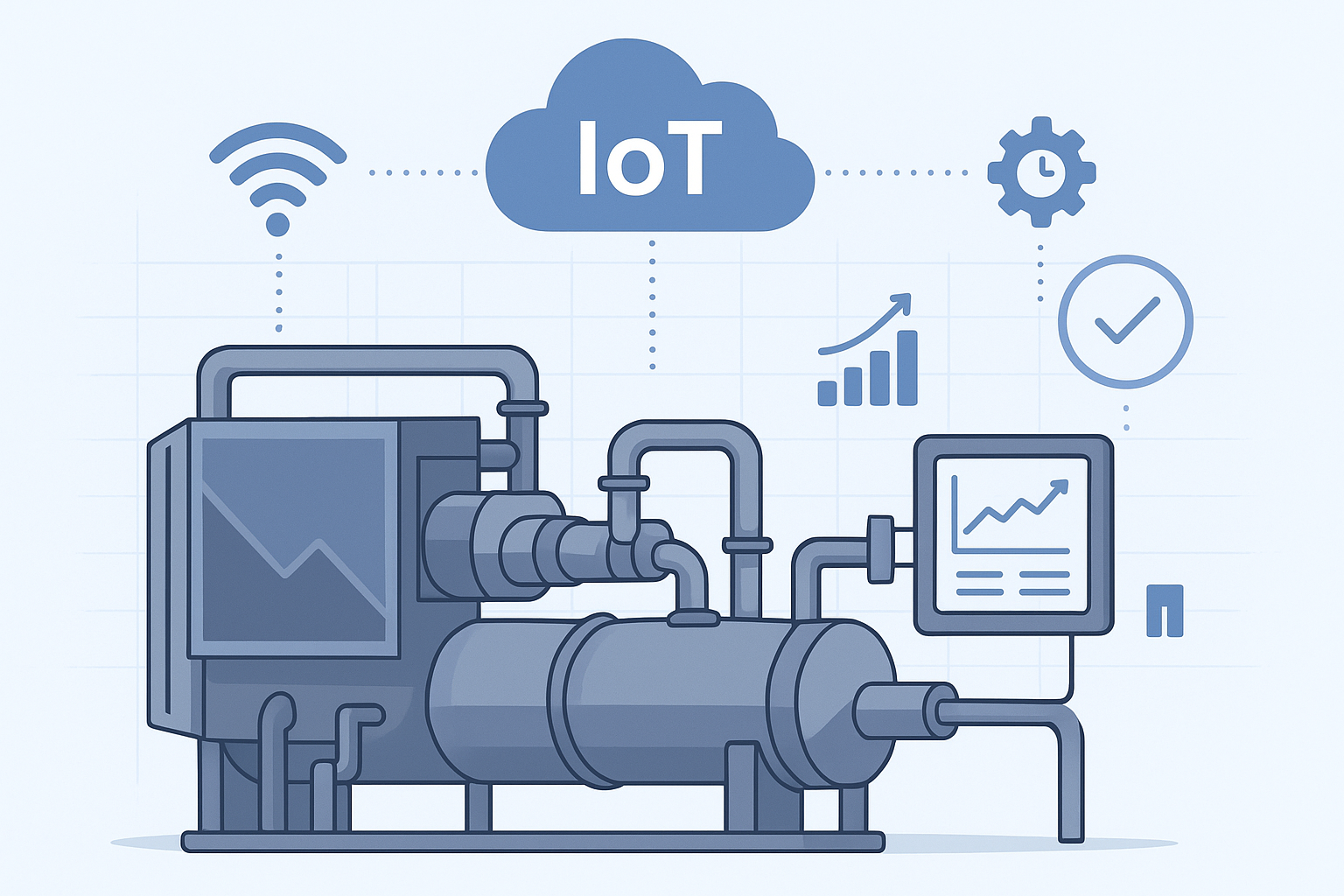
Traditional chiller systems rely heavily on static schedules and manual monitoring. Technology is changing that with IoT-enabled Energy Management Systems that integrates real-time sensor data, cloud analytics, and AI-powered fault detection.
By combining IoT sensors with cloud-based monitoring, building managers can optimize chiller performance – using external data such as occupancy, operating hours, and weather conditions. This allows the system to run chillers at peak efficiency, extend equipment lifespan, reduce unplanned downtime, and significantly lower total energy draw.
The Impact: From Data to Decarbonization
Globally, buildings account for 40% of total energy consumption, and 60% of that is from cooling. Within cooling systems, the chiller plant consumes 85% of the energy, and 70% of that energy is used by the chiller itself.
Given these figures, even modest improvements can have a massive impact. PT DOTS’ data-driven analytics for fault detection, diagnostics, and predictive maintenance help identify inefficiencies such as valve or sensor faults before they escalate.
This proactive approach delivers measurable benefits:
- 5–20% energy savings through intelligent optimization
- Extended asset life and improved reliability across the HVAC system
- Significant cost savings through lower energy consumption and fewer emergency repairs
Building the Future of Smart, Sustainable Cities
As Indonesia continues to urbanize and energy demands rise, digital transformation in building management is no longer optional—it’s essential. PT DOTS is committed to enabling this transition through smart, data-driven technologies that deliver tangible efficiency and sustainability.
Smarter chillers mean smarter cities.
To learn how PT DOTS can help optimize your building’s HVAC systems with IoT and AI, contact us today.
Tags:
air conditioning,
chiller,
energy efficiency,
energy optimization,
HVAC,
Indonesia,
internet of things,
IoT,
IoT Solutions,
smart buildings,
smart city,
smart systems,
smart technology